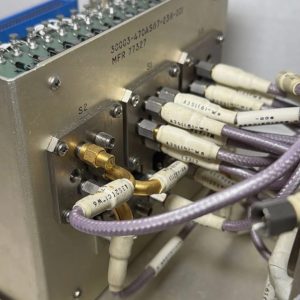
The Aviation Switching Module – NSN 4920-01-250-2696 (AS-IS / Untested) may be suitable for bench evaluation, training here displays, component research, restoration work, parts harvesting, or inventory replacement after exact application verification.
An Aircraft Switching Module and Aerospace Switching Module should be treated as specialized equipment rather than universal components that can be connected to any aircraft electrical system.
An Aircraft Electrical Switching Module, Aviation Electrical Control Module, Aircraft Power Switching Module, Aerospace Electrical Control Unit, and Aircraft Signal Switching Module may describe related switching or control functions, but the exact purpose of this NSN should be verified before use.
Accurate use of Aviation Control Module, Aircraft Electronic Switching System, Aerospace Switching Unit, and Aircraft Electrical Module terminology improves SEO without creating unsupported functional claims.
Key Details of the Untested Switching Module
A matching NSN can improve identification, but it does not establish present condition, functional status, completeness, or suitability for a particular aircraft or test system.
Unknown markings should be photographed and recorded rather than interpreted without support.
Understanding AS-IS and Untested Condition
Transparent AS-IS terms help specialists evaluate price and risk realistically.
Professional evaluation protects the module, technician, test equipment, and any associated aerospace system.
Aviation Switching Hardware Uses
Application accuracy protects buyers from assuming that a broadly named Aircraft Switching Module will fit their project.
External controls may include switches, selectors, indicators, circuit positions, covers, labels, or connection ports depending on the exact configuration.
Aerospace Enclosure and Connector Condition
The module may have been designed for vibration, transportation, storage, maintenance, or aerospace operating environments, but present performance should not be assumed.
Protective caps should remain installed during storage and shipping when available.
Aircraft Electrical Switching Module Inspection
A qualified technician should determine whether additional internal inspection is justified.
Seals, labels, inspection marks, tamper indicators, and original component arrangements may have historical or technical value.
Aviation Module Interface Considerations
The module may interact with relays, switches, indicators, sensors, power sources, test connections, or other control equipment.
High-resolution photographs can preserve readable details before cleaning or restoration.
Aviation Power Circuit Management
An Aircraft Power Switching Module may connect, disconnect, select, or manage compatible electrical power circuits when designed for that function.
Missing covers or barriers may expose conductive points and increase handling risk.
Aviation Control Unit Inspection
Troubleshooting requires a logical sequence based on technical information rather than random power application.
Replacement components should match the required electrical, mechanical, thermal, and environmental characteristics of the original design.
Aircraft Signal Switching Module Uses
An Aircraft Signal Switching Module may route low-level, control, communication, measurement, or test signals between compatible equipment channels.
Shielding, grounding straps, connector shells, cable clamps, and enclosure bonding can influence signal performance where included in the original design.
Control Module Compatibility Review
An Aviation Control Module should be treated as one component within a larger system rather than a standalone universal controller.
A matching NSN or housing does not always confirm identical internal configuration when modifications or supersessions exist.
Restoring Aviation Switching Hardware
Detailed condition reporting supports fair commercial evaluation.
Responsible educational use can extend the value of the Aircraft Switching Unit.
Power Distribution Module Inspection
Professional evaluation helps determine whether the unit serves a power-distribution role or another specialized function.
Preserving the original structure protects the Aerospace Power Distribution Module and its resale value.
Maintaining Legacy Aviation Control Equipment
The unit should be photographed before and after any preservation work.
Continuity measurements, insulation checks, contact-resistance testing, and component examination may be appropriate when performed by qualified personnel.
Aviation Electrical Power Management
Broad market keywords can support discovery while the technical description remains precise.
Safe handling is important even when the Aviation Power Control Module is sold strictly AS-IS.
Aircraft Electronic Switching System Integration
System diagrams can help identify required inputs, outputs, grounds, control logic, and companion components.
Repair documentation can help distinguish module faults from system faults.
Preserving Military Aviation Equipment
The unit should not be stacked beneath heavy equipment or left on conductive surfaces.
Loose accessories should be wrapped separately and inventoried before packaging.
Commercial Inspection of an Electrical Module
A buyer seeking an operational replacement has different needs from a collector, technical school, parts dealer, or restoration specialist.
The seller should explain whether the unit has been powered, opened, repaired, modified, tested, or removed from known equipment.
Untested Aviation Equipment Condition Checklist
The AS-IS and untested condition should appear clearly within the title, description, invoice, and transaction terms.
- Confirm that the identification plate shows NSN 4920-01-250-2696 and record every manufacturer number, serial number, contract marking, revision, and modification label.
- Inspect the enclosure for dents, cracks, corrosion, missing screws, altered holes, broken seals, damaged brackets, and signs of previous opening.
- Report shipping damage, missing accessories, identification differences, undisclosed repairs, or altered condition promptly.
Evaluating an Untested Electrical Module
The module should not be powered until input requirements, polarity, grounding, circuit protection, and expected loads are understood.
Partial operation should not be presented as complete certification, calibration, or airworthiness.
Aerospace Module Component Replacement
Restoration should begin with condition documentation, careful cleaning, technical research, component identification, fault isolation, and repair planning.
Every repair should record the date, technician, fault found, parts replaced, measurements, testing performed, and remaining limitations.
Buying NSN 4920-01-250-2696
For the right purchaser, the unit can offer a useful foundation for technical research, controlled troubleshooting, component recovery, or legacy-equipment restoration.
Careful technical and commercial evaluation can reduce equipment damage, incompatible purchases, missing-accessory costs, testing hazards, and restoration delays.
Whether buyers need an Aircraft Power Switching Module, Aerospace Electrical Control Unit, Aircraft Signal Switching Module, or Aviation Control Module, electrical specifications should be verified before testing.
With prompt attention to switches, connectors, wiring, enclosure condition, corrosion, labels, and internal components, the module can preserve its technical and commercial potential.